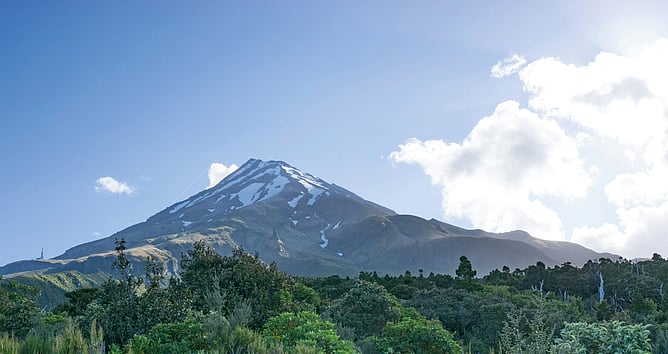
As we move through winter, it’s great to see so much happening across our catchments, with farmers, communities, iwi, schools, industry partners and agencies all working together to deliver practical outcomes on the ground.
This edition highlights just some of the projects and activities underway around the region. From supporting habitat for our nationally threatened matuku-hūrepo (Australasian bittern), to improving fish passage, restoring waterways, developing Integrated Catchment Management Plans, and helping farmers access practical planning tools and resources, there’s plenty going on.
One of the things I value most about TCC is the willingness of people to get involved and work together. Whether it’s sharing knowledge, tackling challenges, restoring habitats, or planning for the future, these projects are driven by local people – you – who care about their catchments and communities.
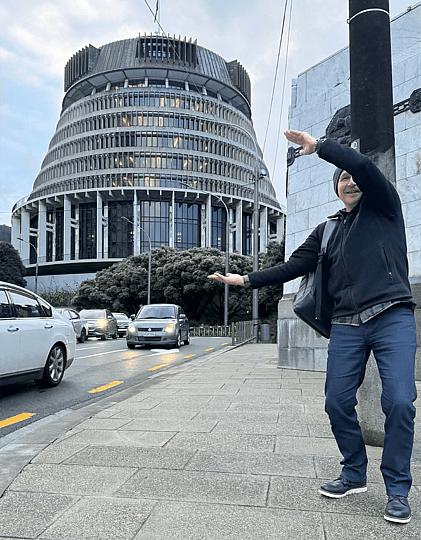
Paul on his way to the CCA Conference at Parliament,
trying (and failing) to grab the Beehive.
A big thank you to our catchment groups, coordinators, partners, funders and volunteers for their ongoing support. The progress highlighted throughout this newsletter is only possible because of the time, energy and expertise that so many people contribute.
Ngā mihi, Paul Turner – TCC General Manager
Project and News Updates
From Taranaki to the Nation: TCC's Good Farm Resources Take Emergency Preparedness on the Road
When Taranaki Catchment Communities (TCC) developed its Good Farm emergency preparedness resources, the goal was always to equip rural communities with practical tools to weather the unexpected. Now, thanks to funding from the National Emergency Management Agency (NEMA), those resources have gone national — and the results have been remarkable.
In early 2026, TCC partnered with NZ Landcare Trust and facilitator Lee Cowan of Avalon Communications to deliver a nine-workshop series spanning eight regions — from Northland to Otago. Drawing on TCC's flagship "Your Farm Emergency Plan" and the "Catchment Communities Emergency Response Guide", the workshops brought farmers, landowners, CDEM teams, Rural Support Trust representatives, and agency staff together in a single room to build the connections and knowledge that matter most when emergencies strike.
The numbers speak for themselves. Across 223 attendees and 111 landowners reached, 100% of workshop content was rated Excellent or Very Good in every region. Nine in ten participants reported gaining "a lot" of knowledge, and between 70–80% said they were "very likely" to do something differently as a result.
Beyond the scores, the feedback captures something harder to measure. "Awesome workshop!! Given lots of ideas to go forward with," wrote one Manawatu-Whanganui participant. Marlborough Emergency Management went further — following their Blenheim session, they wrote formally to express their appreciation, specifically praising the quality of rural engagement and signalling a desire to keep working together.
Participants came away with tangible tools: farm emergency plan templates, grab bag checklists, better understanding of the Rural Rapid Damage Assessment (RRDA) system, and practical technologies like What3Words for precise geolocation. Many were surprised to learn that a completed Farm Emergency Plan may even reduce insurance premiums!
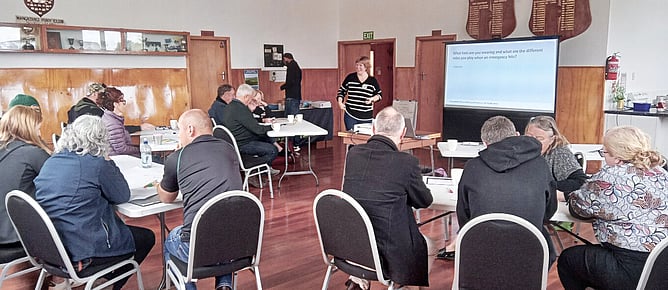
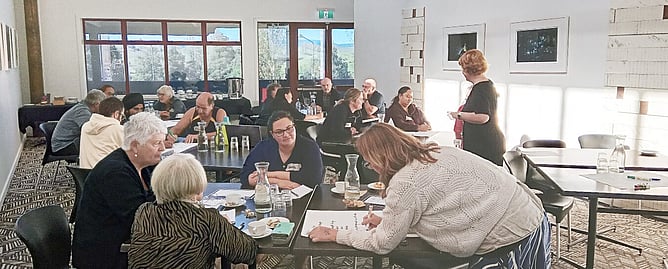
Perhaps the most telling outcome is what has happened since. The workshops have already sparked several independently organised follow-up workshops, booked off communities' own initiative — with more in the pipeline.
This national rollout has proven that TCC's Good Farm resources translate beyond Taranaki. With strong outcomes, growing demand, and formal recognition from emergency management agencies, the model is clear: targeted, community-centred learning builds the networks and resilience.
Helping bittern thrive in Makuri
The TCC team is exploring a new project to support matuku-hūrepo (Australasian bittern) habitat within the Makuri catchment.
Matuku-hūrepo are one of New Zealand’s rarest wetland birds and are nationally threatened. They rely on healthy wetlands, waterways and dense vegetation for feeding, nesting and shelter, but habitat loss has contributed to significant declines in their numbers. Around 1,000 birds remain across the country, with Taranaki estimated to hold fewer than 30.
Over recent months, we’ve been working with the Department of Conservation (DOC) to better understand opportunities within the catchment and identify locations where habitat enhancement could make a meaningful difference. Interested landowners have also been visited to discuss the potential for on-farm habitat improvements.
The project is still in its early planning stages, with engagement with Ngāti Maru to take place before any decisions are made on future work. These conversations will help ensure the project reflects local knowledge, values, and aspirations alongside environmental outcomes.
A predator control trap library is in its initial stages of establishment, providing participating farmers with access to equipment for key habitat sites.
As the project progresses, potential activities will include habitat restoration, stock exclusion fencing, waterway margin widening, shallow berm creation, native planting, and other practical measures designed to enhance waterways and wetland margins for matuku-hūrepo and other native species.
We’ll be sharing further updates as planning continues, so keep an eye on our Facebook page. A big thank you to DOC and local landowners for their support and interest so far.
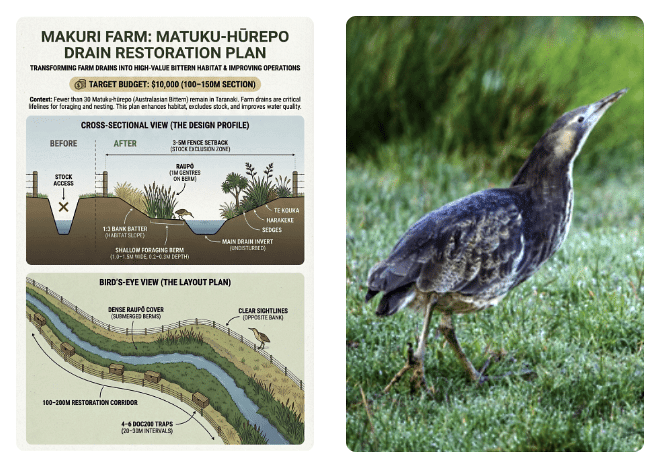
Concept illustration showing how waterway and wetland habitat
enhancements could support bittern within the Makuri catchment.
ICM plans taking shape
We've been making great progress with Catchment Groups on their Integrated Catchment Management (ICM) plans. Following a series of workshops, draft proposals have been developed and shared with groups for feedback.
These plans are designed to help identify local priorities and guide future projects and investment across each catchment. We're now in the final stages of the process, with plans expected to be approved very soon.
Thank you to everyone who has contributed their ideas and insights so far. We’ll share more info in the coming weeks.
Good fish passage is good farming: FREE assessments
TCC is working alongside Wai Connection, with funding support from Toi Foundation, to help farmers better understand what’s happening in their farm streams and how small changes can make a real difference.
We're offering FREE fish assessments as part of catchment management planning. Our fish passage team has been trained by freshwater expert Dr Cindy Baker from Earth Sciences New Zealand, so assessments are done properly and with your farm context in mind.
A few weeks ago, the Awatuna/Auroa/Otakeho Catchment Group spent two days on the Otakeho Stream and tributaries carrying out fish passage assessments.
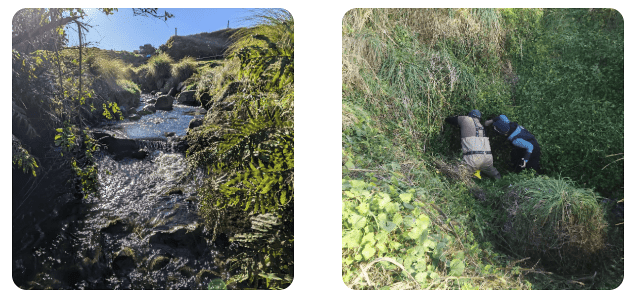
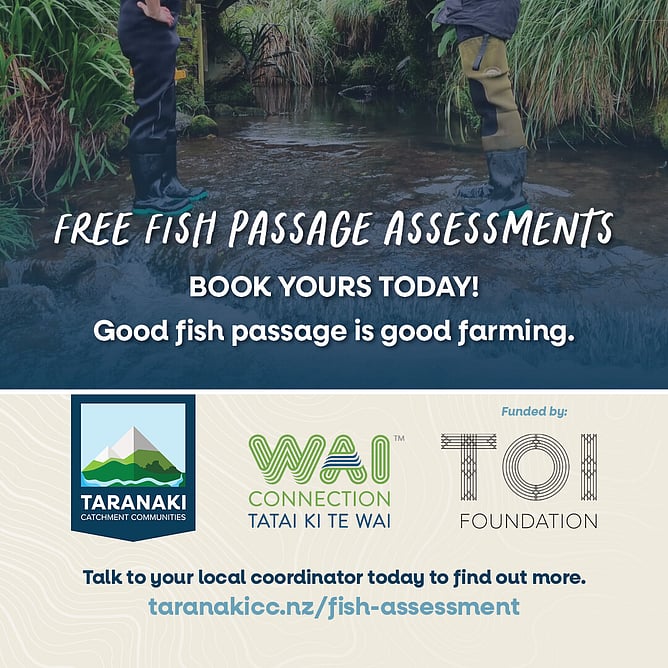
If you’re curious about what’s in your stream or want to know whether fish are getting through, have a chat with your local coordinator today to book a free assessment.
To find out more about fish passage assessments, visit taranakicc.nz/fish-assessment
If you don’t know who your local coordinators are, visit taranakicc.nz/catchment-groups
Taranaki Ballance Farm Environment Awards
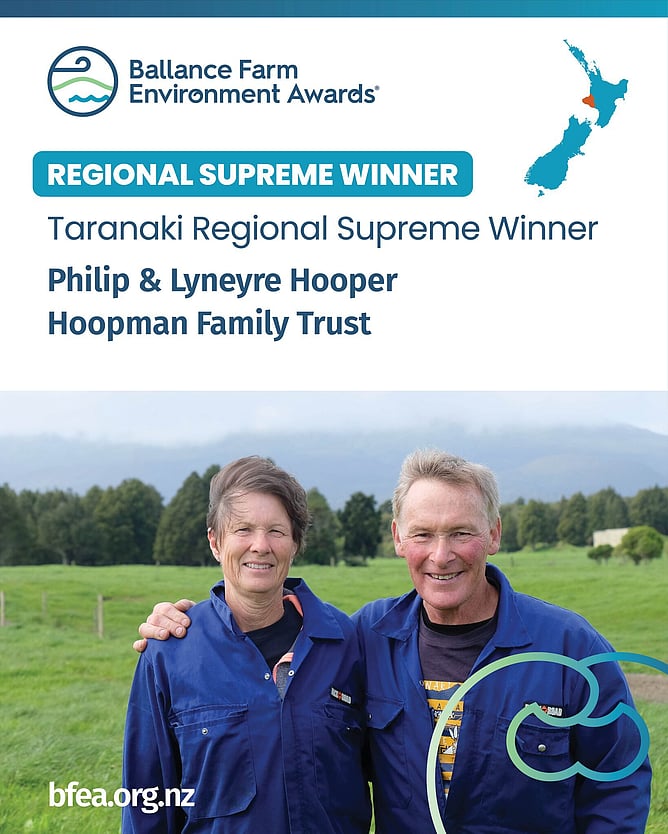
Huge congrats to Philip & Lyneyre Hooper of Hoopman Family Trust who were named the 2026 Taranaki Regional Supreme Winners at the Ballance Farm Environment Awards. From four troughs and no races in 2003 to a fully reticulated, low-input precision dairy grazing system today, their story is about innovation, stewardship and resilience.
Congratulations also to all other finalists who are doing incredible work for farming and the environment in our region.
And a special shout-out to Awatuna/Auroa Farming for the Future for having your catchment showcased — a great example of farmers working together for a sustainable future.
Working together to restore the Kaūpokonui River
The removal of the Kaūpokonui Weir footings marks an important step forward for the river, its ecosystems and the people connected to it.
This project is the result of strong collaboration between Taranaki Catchment Communities (TCC), Ngāti Tū, Taranaki Regional Council and Fish & Game New Zealand, building on earlier work completed in 2021 when the main weir structure was removed. What remained were the footings, which continued to impact natural river flow and fish passage.
With the support of Toi Foundation, who funded the project management, this next stage has now been successfully completed.
Removing the weir footings allows the Kaūpokonui River to flow more naturally again, improving habitat and enabling native fish species to move more freely upstream.
A key part of the project has been the integration of tikanga Māori, ensuring the work reflects the values and aspirations of Ngāti Tū. This approach recognises the deep connection between the river and its people, and the importance of restoring not just environmental health, but cultural wellbeing too.
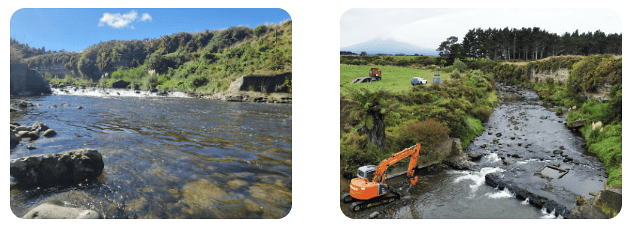
TCC would like to acknowledge the role of Toi Foundation in making this project possible. Without their support, the work would not have gone ahead.
Thanks also to AA Contracting for their professional approach and efficient delivery on site.
This project shows what can be achieved when organisations, iwi and communities work together with a shared purpose. The result is a healthier river, and a strong foundation for ongoing restoration work in the catchment.
Good Farm resources
The Good Farm Planning Hub continues to support Taranaki farmers through workshops, one-on-one support, and partnerships with local experts. The resource hub goodfarm.nz is a one-stop platform offering free planning tools, templates and learning opportunities to help farmers navigate changing regulations and plan for the future.
Good Farm has already helped many farmers tackle individual challenges and implement practical solutions, by offering straightforward guidance on integrated farm planning tailored to Taranaki conditions.
If you haven’t already, check out the Critical Source Areas factsheets at goodfarm.nz/csafactsheets. These 14 downloadable guides explain where sediment, nutrients and contaminants are most likely to leave a farm during wet weather, and outline simple actions to reduce losses while supporting animal health, safety and farm efficiency.
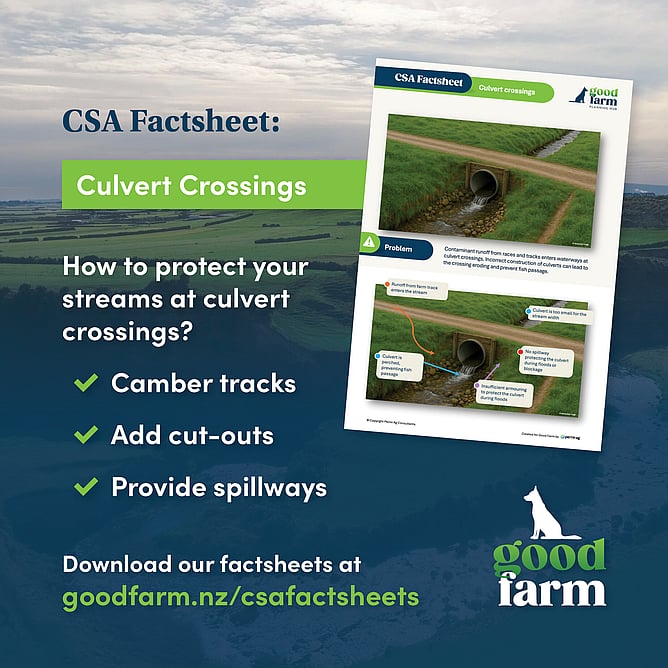
The page also includes short videos showing how to identify these areas and take practical steps to manage risk, meet requirements and protect water quality. Click HERE to learn more.
FREE mapping tool
Catchment groups are often hearing the same question from their communities: how do we turn complex environmental data into something practical and useful on-farm?
For TCC, that question led to the development of the Good Farm Mapping Experience, a free tool designed to give farmers clear, farm-scale insights they can actually use.
The aim was simple. Support farmers with better information to guide decision-making, without adding cost or complexity.
Working in partnership with Collaborations, an environmental and water science consultancy specialising in spatial analysis and catchment-scale modelling, TCC has taken nationally available LiDAR data, already funded through public investment, and applied proven science to create practical outputs for land managers.
LiDAR technology creates a highly accurate 3D model of the land surface. From this, the tool maps how water, nutrients and sediment move across the landscape, identifying flow paths, erosion-prone areas, wet zones and opportunities for effective mitigation. When combined with national datasets and scientific guidance, this information becomes a practical planning tool rather than just a technical map.
For farmers, the value is straightforward. The Good Farm Mapping Experience helps identify where issues are most likely to start, not just where they end up. It supports better targeting of mitigations, more informed conversations with advisers, and stronger farm and catchment planning. Maps and data can also be exported and shared with tools such as Overseer or visual farm systems.
More importantly, the tool is free to access. It is hosted on a secure online platform and made available through local catchment groups, with a focus on supporting practical decision-making rather than adding another layer of compliance.
What’s in it for farmers?
Access to detailed, farm-scale maps built using national LiDAR data and environmental science
Clear visibility of how water moves across the farm, and where erosion and nutrient loss are most likely to occur
Practical insight into where mitigations will have the greatest impact
Ability to download and export farm plans, and share with advisers or tools like Overseer
Free access through catchment groups
Watch our videos to find out more about the tool.
Visit goodfarm.nz/mappingexperience to learn more and request access.
Effluent conversations
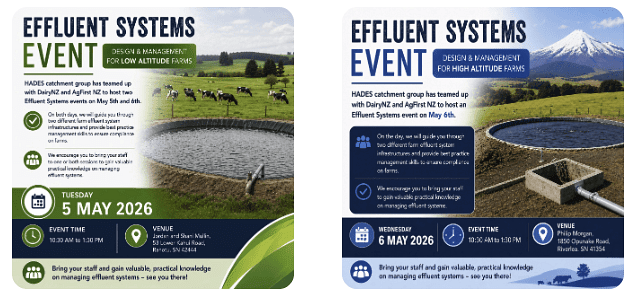
The HADES Catchment Group recently teamed up with DairyNZ and AgFirst NZ to deliver two successful Effluent Systems events across the catchment on 5 and 6 May.
The events gave farmers the opportunity to look at two different farm effluent system setups and discuss practical management approaches to help support good on-farm practice and compliance. Separate sessions were tailored for both low-altitude and high-altitude farming environments, ensuring discussions remained relevant to local conditions.
It was great to see strong engagement across both days, with plenty of practical conversations and knowledge sharing between farmers, industry representatives, and rural professionals.
Effective succession planning
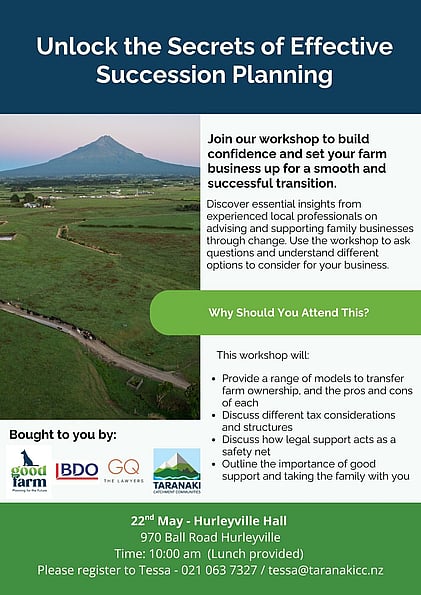
Farmers and rural professionals recently gathered at Hurleyville Hall for a practical workshop focused on farm business transition and succession planning.
Delivered with support from experienced local professionals, the session explored a range of farm ownership transfer models, tax considerations, legal structures, and the importance of bringing family members along through the process.
The workshop provided a valuable opportunity for attendees to ask questions, discuss different approaches, and build confidence around planning for the future of their farm businesses. Lunch and informal discussion also gave people the chance to connect and continue conversations with others facing similar challenges and opportunities.
Coming Up
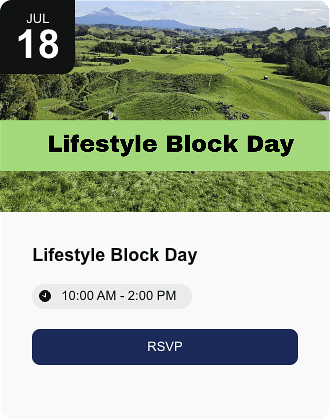
Lifestyle block day
Join us at 10am on Saturday 18 July at Kaimata Hall (722 Tarata Road) for an awesome marketplace-style event for anyone managing, living on or interested in lifestyle blocks under 40 hectares. Meet local businesses, services, gain practical knowledge, share experiences, and connect with others living the rural lifestyle.
To RSVP, please call 027 789 4351 or email marcia.millard@gmx.com
Pest management workshops
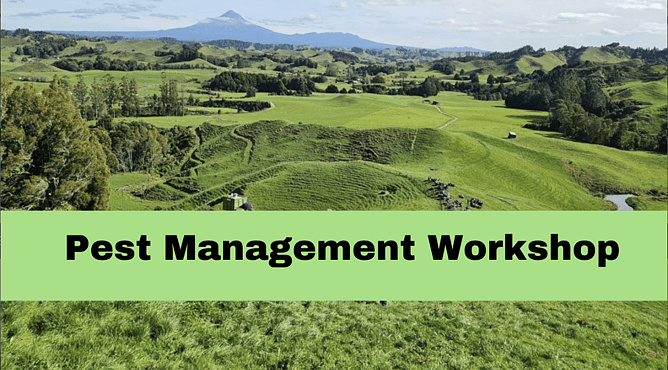
Learn about common pests and pest plants in Taranaki, how to identify them, and practical control options at our family-friendly workshops in Ratapiko Hall and Tarata Hall on 7 and 14 July. Find out more at www.taranakicc.nz/events and be sure to RSVP to secure your place.